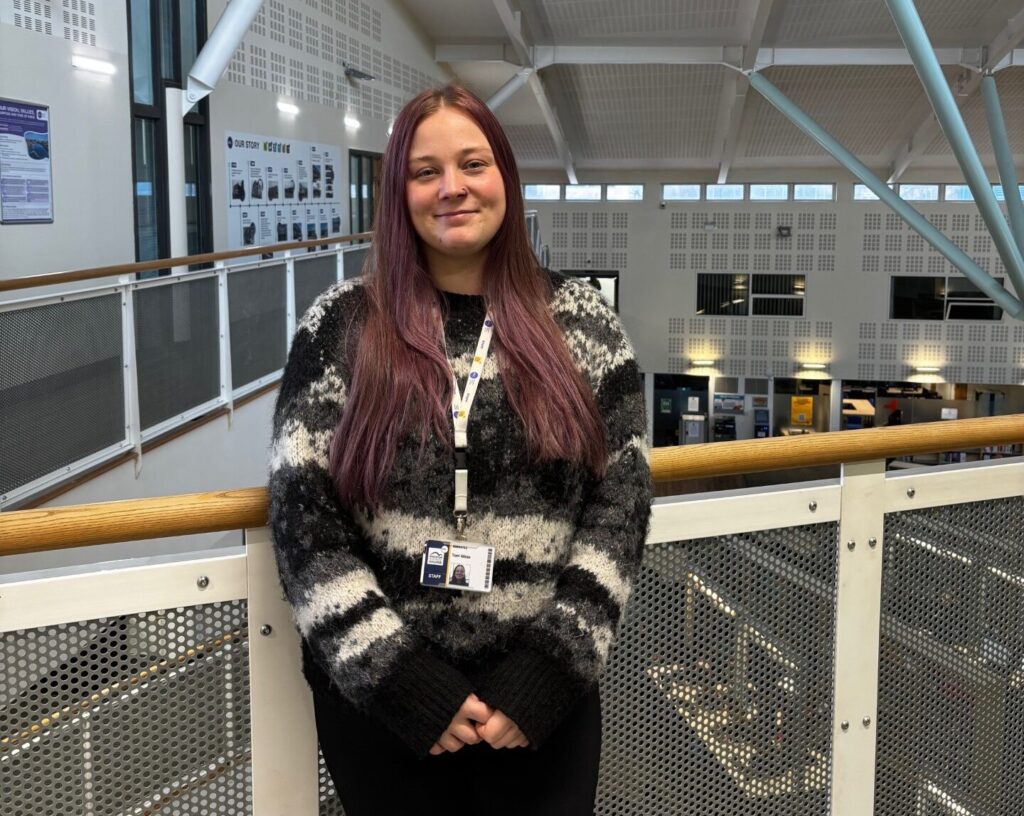
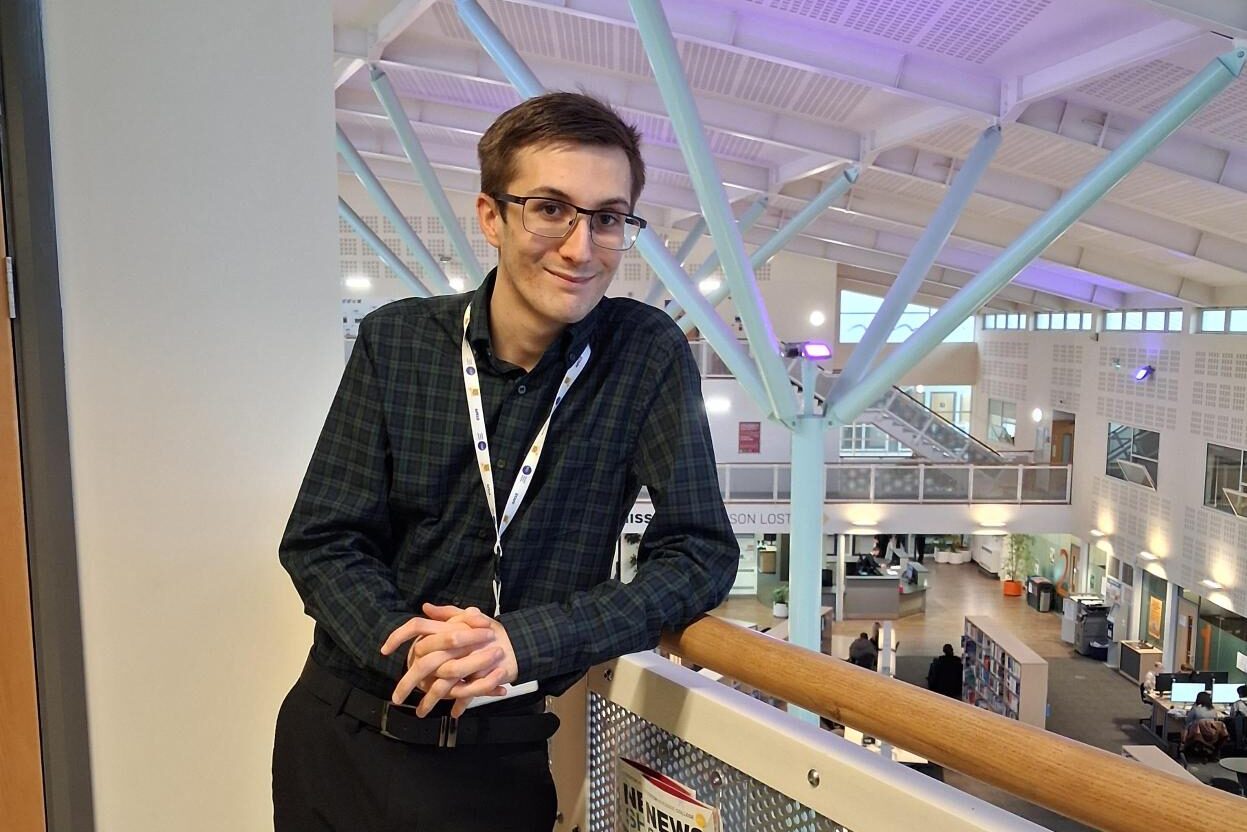
Continuous professional development forms a key part of our ethos at the Etc., and Morgan and Sophie from our group student recruitment team are excellent examples of what it means to upskill alongside your current full-time role.
Group Student Recruitment Manager and Officer respectively, Morgan and Sophie are currently enrolled on a Multi-Channel Marketer Apprenticeship, delivered at Stockton Riverside College. Both are passionate about incorporating their learning into understanding how the marketing team works within the group, and how the next generation are utilising digital platforms to help bolster their offer as they visit schools and recruit future students.
Sophie, a self-confessed lover of being busy, is completing her apprenticeship alongside her current full-time role and another qualification. She said: “I love learning and developing, and this apprenticeship felt like the natural next step – I’m grateful to have been supported with the opportunity by my manager, Morgan.
“The qualification also opens up lots of new ways for me to progress in the future, having gained lots of experience already in everything from social media and business theory to website building and web marketing.”
The marketing and recruitment teams within the Etc. work closely together, something that was a driver for Morgan deciding to start the apprenticeship. She said: “I’m a creative person, and the creation of the portfolio really lends itself to my skill set, bringing the two worlds of marketing and recruitment together.
“I’ve surprised myself by enjoying things I’ve never tried before and in turn it’s paved the way for opportunities that I would never have considered in terms of my progression. The fact that Sophie and I can go on this journey together is brilliant.”
The Multi-Channel Marketer Apprenticeship is a creative role suitable for those who would like to develop their knowledge and skills for delivering marketing campaigns for an organisation or brand. The skills are transferable to different job roles, particularly if done in tandem with existing employment.
National Apprenticeship Week 2026
National Apprenticeship Week brings together businesses and apprentices across the country to shine a light on the positive impact that apprenticeships make. Read a collection of stories about some of our incredible learners.
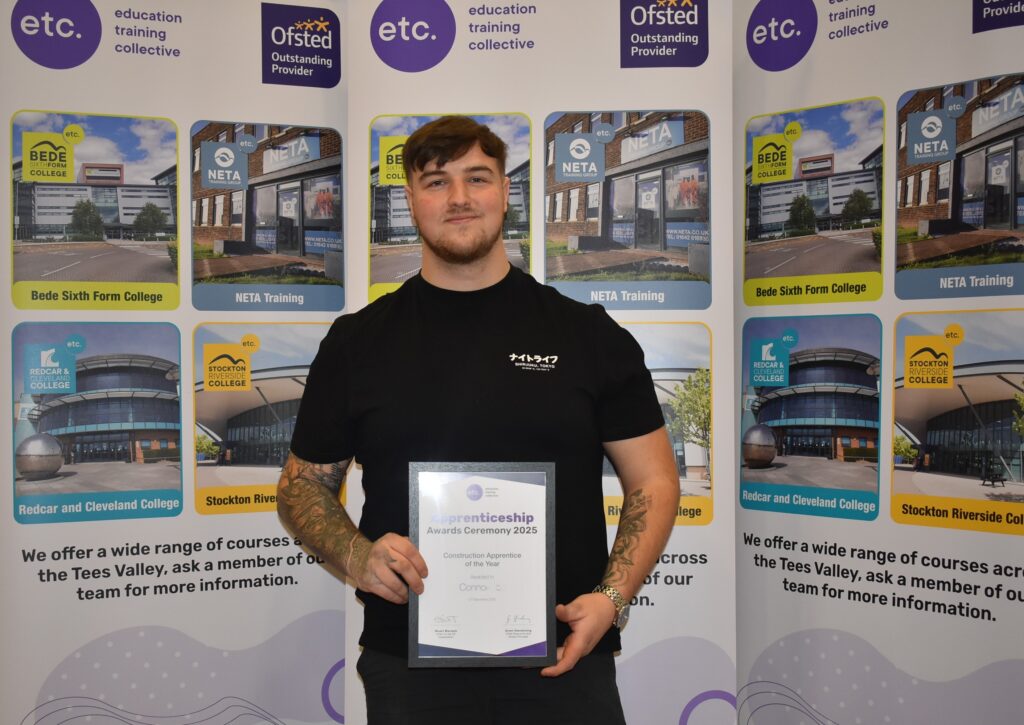
Climbing the property ladder and winning awards: Connor’s career path | Redcar & Cleveland College
Middlesbrough-based Connor is a plumbing and heating apprentice at Redcar & Cleveland College, a step in his career that now means he does a job he loves and amazingly, the income whilst he learned enabled him to take a significant step in his personal life – buying a house!
Employed by TRD Heating, he was awarded Construction Apprentice of the Year, something that he was super proud of: ‘I was honoured and ecstatic to have won. My apprenticeship is hard work but so enjoyable and rewarding. My employer keeps me motivated, and I look forward to what the future holds – hopefully I continue being successful!’
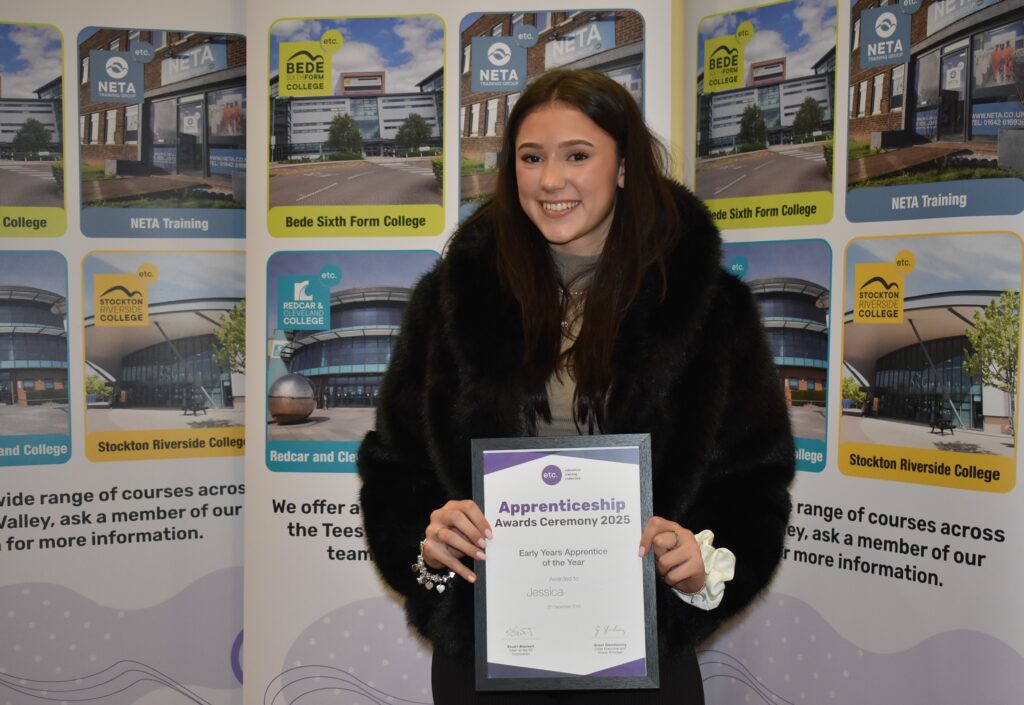
Award-winning apprentice a step closer to dream Early Years career | Stockton Riverside College
19-year-old Jessica dreams of spending her career working with children, and the opportunity to work as an early years practitioner with Norton Nursery through Stockton Riverside College has been the ideal stepping stone to making that future a reality. This year she was nominated for Early Years Apprentice of the Year and won!
‘I chose an apprenticeship to gain valuable workplace experience and build relationships with those who already work within the sector. It was absolutely brilliant to have won the award for apprentice of the year, and I’m really proud of how I’ve continued to learn and grow.’
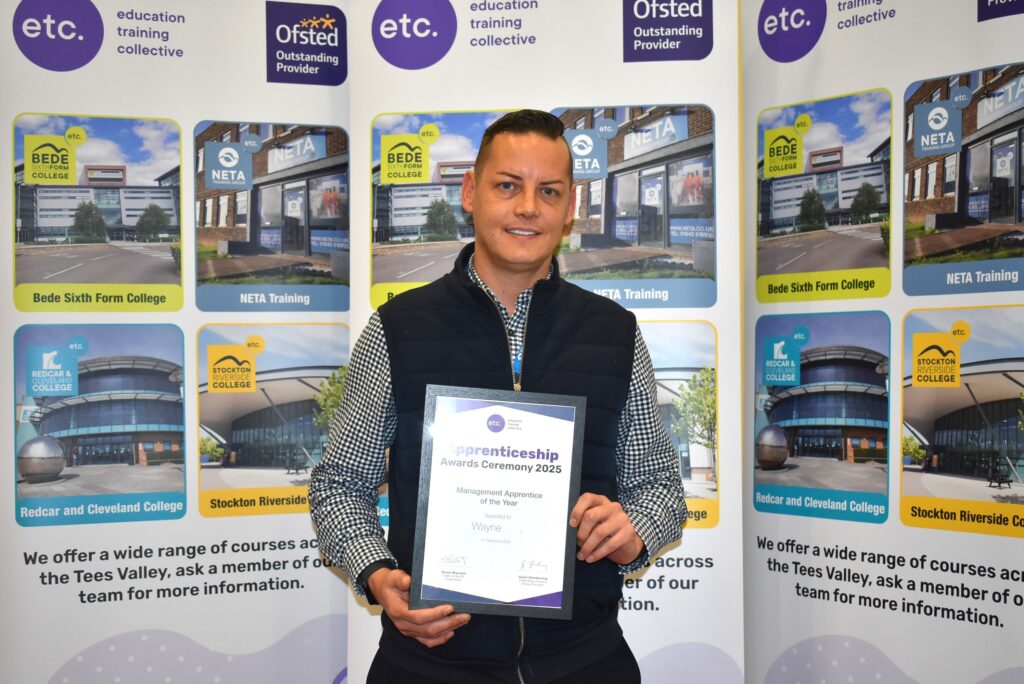
Leaders of the future: Wayne’s journey | Innersummit
Aspiring leader, Wayne joined Innersummit as part of our Team Leader & Management Apprenticeship course, going on to win Management Apprentice of the Year!
‘My employer and the college have always invested in me. They want me to grow my skills and make sure that I have enough time do get everything done. The self-growth I have experienced has been massive, and I already process things differently than I would have done before.’
Praising his tutors for their understanding and investment in his future, Wayne looks forward to what’s next in his career.
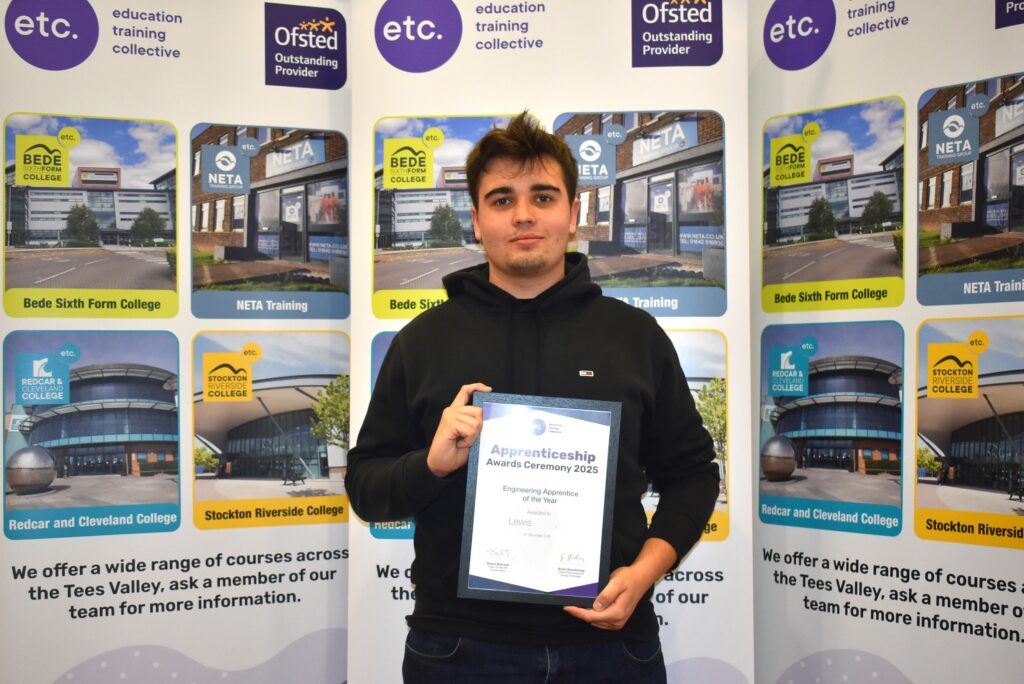
Hard work and ambition sparks Lewis’ future | NETATraining
Apprentice electrician at NETA Training, Lewis was awarded Engineering Apprentice of the Year, flying high amongst his peers in a trade that he’s always been passionate about.
‘My employer has been fantastic in offering me support and additional training so that I can build on my practical skills in the field. Winning the award was fantastic and just goes to show that hard work pays off.
‘Choosing an apprenticeship meant I can learn key practical skills, gain knowledge and achieve qualifications at the same time. It’s also opened the door to so many opportunities in an industry I really enjoy – I can’t wait to build on my career.’
Following in the footsteps of her dad, Toni is now teaching the trade she came to love | Stockton Riverside College
Following in her family’s footsteps, Toni glass left her part-time job that she worked alongside university to pursue opportunities, and instead found her interest sparked in the same industry as her electrician-by-trade dad. Now, she is an apprenticeship tutor of Electrical at Stockton Riverside College.
‘My dad has been an electrician since he left school, and when he mentioned he was starting a big job at his company, DM Glass Electrical Services LTD, and needing some extra labour, I jumped at the chance as I was still on the lookout for a permanent, industry specific role at the time.
‘It was never boring; I was doing something different pretty much every day! The theory side was much less daunting than I first thought, and with only one day a week at college it was the perfect balance for me.’
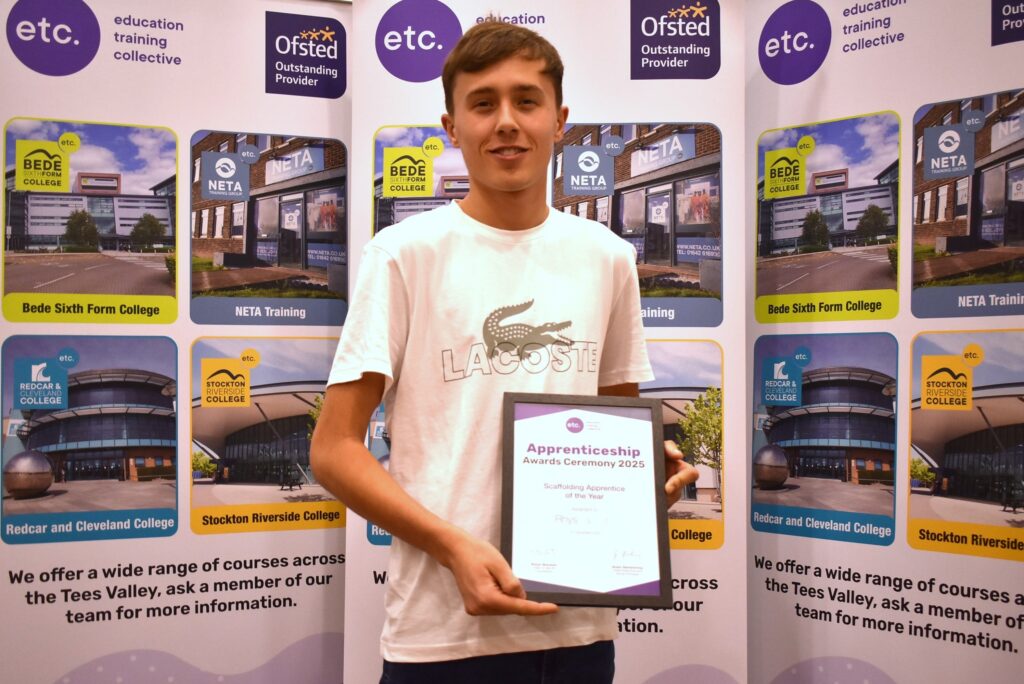
Rhys is climbing the ladder to success | NETA Training
Rhys was announced NASC Scaffolding Apprentice of the Year 2025, sponsored by CISRS, at a star-studded award ceremony in Manchester.
“I’ve certainly had some amazing opportunities so far,” said the 18-year-old who was presented with the award on stage alongside a star-studded lineup.
His boss, Ryan Payne, chief operating officer at JMAC Group, added: “It doesn’t get much bigger for a scaffolder than winning a NASC award.”
Rhys is already proving himself a rising star in the trade after impressing his bosses, assessors and colleagues with his enthusiasm and ambition.
Tyler shines as Esh Group promotes upskilling and apprenticeships among workforce | Redcar & Cleveland College
Named winner of the Apprentice of the Year title at Esh, alongside six other talented apprentices, Tyler was recognised for his exceptional dedication, work ethic and willingness to learn his trade.
His work exceeds the standard that would be expected of someone at the start of their career after only a short time with the business. He was highlighted as someone who has a proactive approach and is able to work independently, actively seeking to help others on site where possible.
Everything has come full circle for Leighton | Redcar & Cleveland College
Starting his career as an apprentice in events and marketing, Leighton dreamed of working in education, supporting students as he was supported during his latter education years.
‘I knew education wasn’t for me, I didn’t thrive in that environment, so an apprenticeship was the perfect next step for my career. I chose Stockton Riverside College because it was a convenient location for me, and now I work at Redcar & Cleveland College – the best of both worlds!
Now 18, Middlesbrough-born Leighton would like to progress to do L3 Teaching and Learning alongside his role as a learning support assistant. He encourages people to consider different ways to learn:
Meet James, Stockton Borough Council’s Employee of the Year | Innersummit
After attending sixth form and achieving 3 A levels, James found that university wasn’t for him and left to join the police. Still volunteering as a special constable in his spare time, James now works as strategic housing officer role at Stockton Borough Council, and in 2025 won Employee of the Year!
‘The role I do at the council has been brilliant, and its commitment to professional development has meant that I’m currently doing a Leadership and Management Apprenticeship.
‘It was the natural next step for me as I hope to move up in the organisation, and allows me to continue working whilst upskilling.’
Whether you’re interested in entry level apprenticeships or courses that upskill your existing team, contact the team at Innersummit: hello@innersummit.co.uk
George’s journey after A Levels | Bede Sixth Form College
In the lead up to leaving Bede Sixth Form College after completing A levels, George wasn’t 100% confident that university was the right next step for him.
“I knew a degree didn’t always offer placement opportunities, and that I’d come out of it with potentially little to no work experience. I wanted to expand my horizons to all the options available, and as I was familiar with the Etc. I started a Bespoke Employer Led Programme with Stockton Riverside College, Business Administration and Employability Skills, and the rest is history!”
The 19-year-old is now apprentice administrator at Stockton Riverside College, working towards his L3 Business Admin. Praising the supportive team at the college he said: “The team I work with are so friendly and approachable. The role itself is always different; I’m constantly problem solving and thinking on my feet – excellent transferable skills for the future.”
Learning skills for life with industry experts | Redcar and Cleveland College
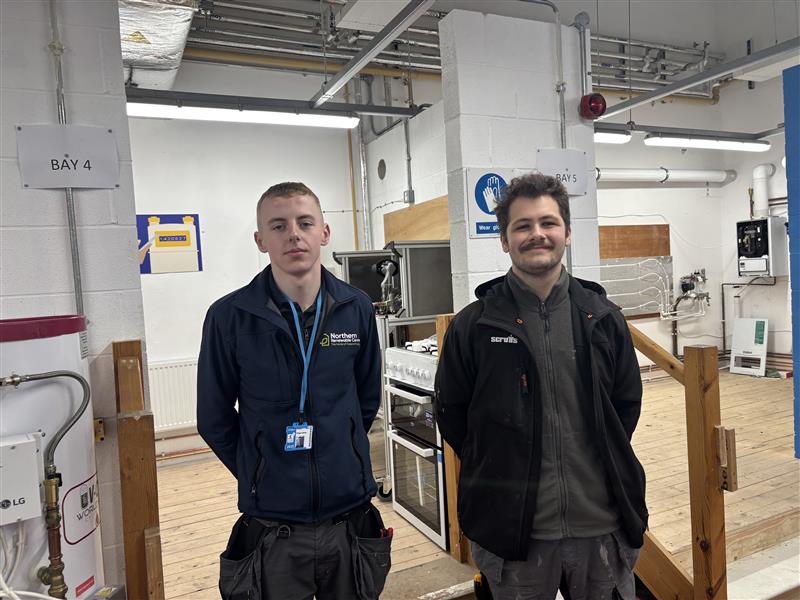
Lucas, Brogan and course lead for plumbing, Mark can’t speak highly enough of the benefits of the course. When he was at school, Lucas always wanted to be a Marine Biologist: ‘I originally wanted to be in a completely different industry, but realising I’d have to do A levels and university really put me off. I knew Mark as he worked with my dad, so it feels like my journey has come full circle, and I’ve ended up doing something I love.’
The learners, both 19 years old, completed a L2 Plumbing course, a T-Level and are now on their Plumbing Apprenticeship. They say that Mark sells the course really well, and it makes a massive difference that he has real world industry experience to relate all of his teaching to.
Brogan said: ‘An apprenticeship is hard work, but worth it. It gives you security in knowing you’ve got skills for life and you’re earning money whilst you’re still training.’
The privilege of watching students mature and progress | Redcar and Cleveland College
Wet Trades Course Leader at Redcar and Cleveland College, Adam is passionate about passing his knowledge on to the next generation, a journey that for him began over two decades ago with a Plastering apprenticeship.
Remaining true today, the college was and is the only place in Teesside that offers the course as an apprenticeship. After gaining his qualification, Adam gained a wealth of experience from flood and fire restoration work to housing associations, commercial restoration and eventually running his own successful business.
‘As part of running the business I took on a lad for work experience, and when his tutor came out to see him, we got talking. It turned out there was someone in his team retiring and there was going to be a position available – and here I am! Teaching the course I completed, following in the footsteps of the person who taught me it.’
FE Commissioner hosts first strategy meeting at Stockton Riverside College
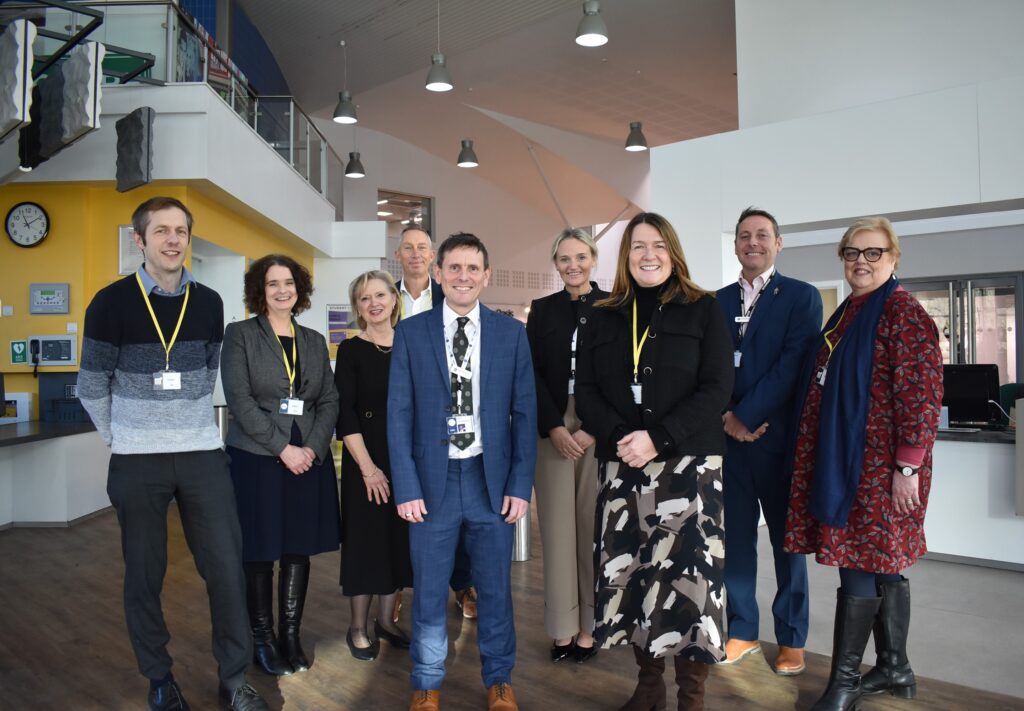
Further Education Commissioner, Ellen Thinnesen OBE, visited Stockton Riverside College, where she hosted the first strategy meeting with her Deputy Further Education Commissioners.
Stepping into the role this month, the commissioner and her team will work with colleges across England to drive improvements in the sector.
The newly appointed FE Commissioner said: “It was important my first strategy meeting with deputies took place within the FE sector, rather than in a central or remote location.
“Whilst we had a packed agenda, holding the meeting in a college allowed part of it to be opened to the college’s chief executive and chair, enabling rich two-way dialogue, and with students too. It is an approach that underlines our ongoing commitment to listen and engage meaningfully with the sector.”
No stranger to the region, as the former chief executive of Education Partnership North East, the commissioner said: “Located in the North East Stockton Riverside College was chosen because it exemplifies the vital role further education plays in supporting residents, local communities and employers.
“The college is part of an Ofsted Outstanding college group and is renowned for its strong partnerships, wide-ranging academic, vocational and technical provision, and focus on skills development that directly responds to regional economic priorities.
“The college demonstrates the innovation, adaptability, and impact FE colleges have in shaping opportunities for learners of all ages.”
Taking the opportunity to tour the college, Ellen was joined by Roger Cotes, Director for Post-16 Regions and Providers at the Department for Education, as well as deputies, Frances Wadsworth, Becky Edwards, Graham Razey, and Esme Winch – all sector experts and specialists.
“It is fantastic that the newly appointed FE Commissioner chose Stockton Riverside College to host her first strategic meeting,” said Grant Glendinning, chief executive officer and group principal of the Education Training Collective, which incorporates Stockton Riverside College.
“For us, it’s a chance to showcase the college and the work that goes on here and across the group, and to have a seat at the table at the very start of those important early conversations.”
The role of the FE Commissioner, her deputies and advisers, is to support and strengthen leadership and governance of colleges. Ellen will also play a key role in delivering the government’s Plan for Change, focused on growing the economy in key sectors, and breaking down barriers to opportunity by tackling the number of young people not in education, employment or training.
Of her new appointment Ellen said: “On a personal level, taking up this position is both a privilege and a responsibility. I feel a strong sense of purpose stepping into this role and in being able to directly support a sector I am not only a product of, but also deeply value.
“Further education shaped my own opportunities, and I am passionate about ensuring the sector continues to raise standards and provide life-changing experiences for others.
“I have always believed every college should be the very best version of itself, and in this role, along with my team, we have the chance to work with governors, leaders and stakeholders to help colleges achieve that potential.”
Deputy CEO bids a fond farewell to college that gave him new direction
When Jason Faulkner, fresh out of the army, started work as a Prince’s Trust Team leader at the then Stockton and Billingham Technical College he could have had no idea of what lay ahead.
“I certainly never imagined being here 23 years later as the deputy chief executive officer of what is now the Education Training Collective,” he said.
Looking back at a career jam-packed with highlights, it makes walking away all the more difficult.
But after over two decades of helping the group achieve its ‘Outstanding’ potential, Jason is preparing to bid a fond farewell to the organisation that gave him new direction.
As the newly appointed Principal and Chief Executive of Burnley College, he is looking forward to the new challenge and exciting opportunities ahead.
“It is quite emotional, and I don’t think it has truly sunk in yet,” said the Middlesbrough dad whose roots are firmly forged on Teesside. “But I am optimistic about the future and being able to share the skills I have developed with another college and the surrounding communities there, and add value to their, and my, next chapter.”
Jason Faulkner, Deputy Chief Executive Officer of the Education Training Collective (Etc.)
Today the Education Training Collective encompasses Stockton Riverside College, Bede Sixth Form College, NETA Training, Redcar and Cleveland College and Innersummit, and Jason has been there every step of the way.
Proud to have played such a substantial part in the Etc.’s evolutionary journey, he said: “I remember the previous chair of the governing board saying to me, ‘we are custodians of the college for a point in time and, as such, we should aim to leave it in a better place than we found it’.
“I always remember that and as I sit and reflect, I would like to think I have made a positive contribution.”
Looking back, for Jason, one of the biggest achievements, both personally and for the group, has been the turnaround of Redcar and Cleveland College.
He said: “That’s not just about the achievement data or student numbers. It is the work that has been carried out with supportive partners, the capital investments that have led to massive innovation at the college, and the relationships built with the local authority and employer partners.
“For me, the biggest thing is that Redcar and Cleveland now has a college back at the heart of its community, with a sustainable future, that people can be proud of.”
It’s no surprise the college should feature among his proudest achievements, for after working his way through the ranks to assistant principal at Stockton Riverside College, he was appointed Redcar and Cleveland College’s principal in 2018 following merger.
Since then, the college’s relationship with major employers investing in the region has flourished, particularly with developments on the doorstep.
While Jason is quick to point out that he’s no expert in the likes of renewables, carbon capture and hydrogen as an alternate fuel source, he has made it his job to do his research to better understand the skills demands that are coming and be ready to respond to them.
It’s given him a seat at the table for some top-level discussions and keen to give back to the community he’s found himself on the boards of the South Tees Development Corporation and the local Town Deal, as well as giving his time as a governor for schools in the area.
Appointed Etc. deputy chief executive in 2024, Jason said: “None of this is what I expected when I joined the college as an introduction back into civilian life.” He applied for that first job because he had experience in the likes of teamwork and outdoor education. It turns out he had lots of transferable skills too, not least in leadership.
Practising what they preach, he has continued to study himself as an adult learner, achieving his degree in education and leadership and management qualifications.
Forever attached to Teesside – “it is home” – the 53-year-old will now continue to follow the developments happening in the Tees Valley and how the skill pipelines he has helped to create continue to deliver.
After all, more than the accolades and more than the Etc. Outstanding Ofsted rating that came early this year, that’s got to be the best part of working in education, knowing the impact the individual colleges and providers have on so many lives.
While saying goodbye to the Etc. will be tough, the research into Burnley, Lancashire, its current position and demands, has, of course, already begun.
Jason said: “Leaving the Etc. is going to be hard. I have forged so many relationships with incredible colleagues, external partners and stakeholders.
“But I am inherently competitive in nature and always wanting to continue and improve. Burnley feels like a place where my skills and experience align, and I can add real value. This feels like the right fit.”
The Future of Work
By Grant Glendinning, Chief Executive Officer, Education Training Collective (Etc.)
Grant Glendinning of Etc. Image: Dawn McNamara Photography
We are living through one of the most profound transformations in the history of work. In the space of five years, our relationship with work may have changed more than in the last 50 — not only through technology, but through shifting attitudes, new expectations and a growing realisation that the future will be defined by how well we adapt.
For those of us working in further education, this is more than an academic conversation. Our colleges sit at the junction between education, employment and innovation. We are preparing people not for a single job or career, but for a lifetime of change.
So, what does the future of work really look like? I think there are three interlinked strands shaping it – how people’s attitudes to work are changing, the types of skills we’ll need in the years ahead and the unstoppable revolution of artificial intelligence (AI) that will influence almost every role.
Attitudes have shifted
The pandemic was a watershed moment for how people view work. In a matter of weeks, millions of workers moved from offices to kitchen tables and “hybrid” became the new normal. But this was more than a logistical change — it was a psychological one. People began to reassess what work meant to them – especially in the wider context of the whole that is their life and the other roles they play.
According to Deloitte’s 2025 Gen Z and Millennial Survey, younger workers are now more focused on wellbeing, flexibility and purpose than on pay or promotion. They want feedback, transparency and authenticity from their leaders. McKinsey’s research adds that Gen Z employees actively seek work that reflects their values — and they are prepared to leave if it doesn’t.
That’s a big shift from earlier generations who tended to define themselves by their work. Today’s workforce is far more likely to question, “Does this work fit into my life?” rather than, “How do I fit my life around work?”
And as Generation Alpha — today’s school children — begins to enter further education and the workplace, those expectations will change again. This is a generation that has grown up with Alexa, spent their play time with smart devices and increasingly with AI companions. They’ll expect instant access, personalisation and flexibility as standard. For them, digital tools aren’t “technology” — they are just life.
Just over the weekend I witnessed a child ask their parent if they still had hold of the phone – but they didn’t signal this with the hand to ear gesture I know, instead used their thumbs to indicate typing on a screen. Life is different.
All these changes, mean that for employers, work must be meaningful, inclusive and aligned with personal values. For educators, it means our learners need not just skills, but clarity of purpose — a sense of who they are and what they want to contribute.
All of this needs to fit within the realms of the world they know and operate as part of.
In short, people now want work that matters. And that has deep implications for how we design curricula, shape careers guidance and define success in further education.
Future skills and the human advantage
If attitudes to work are changing, then so are the skills that matter most.
The World Economic Forum predicts that 44% of workers’ core skills will change in the next five years. Technical competence remains essential, but the ability to learn, unlearn and relearn will be even more valuable.
Employers increasingly talk about “hiring for culture and training for skills.” What they mean is that behaviours — adaptability, collaboration, curiosity, empathy — are now the most enduring differentiators.
McKinsey’s Future of Work report notes a steep rise in demand for social and emotional skills, even in technical roles. It’s not that technical skills are becoming obsolete — they’re just evolving too quickly to be the only focus.
For FE, that’s both a challenge and an opportunity. Colleges have always been strongest when learning is applied, practical and connected to real work. But the next phase of that evolution is to weave meta-skills — learning agility, problem-solving, communication, ethical reasoning — through every programme.
That doesn’t mean we should abandon technical content. Far from it. But we do need to teach it in ways that prepare learners for reinvention. The reality is that the qualification someone earns at 19 might not match the job market at 29. What matters is that they know how to keep learning, adapting and contributing.
The FE sector is already leading this change, responding to Local Skills Improvement Plans and through initiatives such as digital bootcamps and T Levels. But we must go further – by embedding cross-sector projects, real-world AI tools and employer co-design into our courses, we can create learning experiences that are as dynamic as the world of work itself.
The unstoppable rise of AI
I used to say that Chat GPT is only as old as the shoes I wear. I’m not sure that’s now the case, but it’s impossible to talk about the future of work without talking about AI.
Artificial intelligence is not a distant threat or opportunity — it’s part of the world of work right now. McKinsey’s State of AI 2024 report found that 78% of global companies are already using AI in at least one business function, compared with 55% just a year earlier. That is an astonishing rate of adoption over the lifetime of a pair of shoes.
AI is already capable of performing a vast range of tasks once thought to require human intelligence — from legal research to customer service, from medical diagnostics to writing code. Amazon Web Services, for example, can now automate entire finance or HR functions.
What does that mean for work — and for education?
Some jobs will certainly disappear. McKinsey estimates that roughly a quarter of current roles could be largely automated in the next decade. But it must be true to say that nearly every job will change.
At its best, AI has the potential to make work more meaningful. It can take away the dull, repetitive, administrative parts of our roles, freeing people to focus on creativity, collaboration and care. Imagine the world where teachers spend very little time on paperwork and almost all their time inspiring learners; or when healthcare workers’ time is entirely with patients, with virtually none on data entry systems.
But the transition won’t be painless. Not all sectors or communities will benefit equally.
That’s why FE’s role as the bridge between education and employment has never been more important. We are the system best placed to help people retrain, reskill and reinvent themselves. But we will need to be as agile as the world we serve.
The risk of forgetting the human
In outsourcing more and more of our thinking to machines, are we at risk of deskilling ourselves?
I think of the brain as like a muscle: if you stop using it, it weakens. You need to use, access and strengthen neural, synaptic pathways. This is why musicians practise and the more you do mental arithmetic the better you get at it.
AI can make our work more efficient, but it can also make us intellectually passive if we’re not careful. If technology does all the planning, analysis, problem-solving and even creativity, I am genuinely concerned we risk dulling our own cognitive abilities.
That’s why education must remain fundamentally human. Technology should augment, not replace, our capacities.
For FE, that means teaching digital and technical fluency alongside critical thinking, ethics and creativity. It means ensuring that learners understand not just how to use AI, but when to use it — and when to rely on their own judgement instead.
When the first Large Language Models became available to all, understandably, this prompted a moral panic about plagiarism. But this was such a narrow focus. The benefits of AI in education are enormous, and colleges are already showing how to get this balance right. They are experimenting with AI tools for teaching and assessment, but they’re doing so with a focus on pedagogy and purpose.
The challenge now is to embed that same balance across the curriculum: human plus machine, not human versus machine.
5. Implications for Further Education
So, what should we take from all this?
First, FE providers must keep scanning the horizon. The world of work is evolving faster than our systems can currently respond, and curriculum lag is a real risk. Strong partnerships with employers, local authorities and regional skills boards will be essential to stay aligned with future demand.
Second, staff development is paramount. Educators need confidence not only in digital tools but in the pedagogy of digital learning. Professional development should focus as much on curiosity and experimentation as on compliance.
Third, we must design our offer around the whole learner. Gen Z and Gen Alpha students want meaning, autonomy and belonging. FE is well placed to deliver that through authentic learning experiences, industry placements, and supportive college cultures.
Finally, we should not lose sight of FE’s moral purpose. Our sector has always been about inclusion — giving people second chances, new starts, and pathways to meaningful work. That mission is more important than ever. As technology reshapes the economy, FE must remain the system that ensures no one is left behind.
Sources referenced: Deloitte (2025) Global Gen Z and Millennial Survey; McKinsey & Company (2024) The State of AI and A New Future of Work; World Economic Forum (2023) Future of Jobs Report; Vantage Circle (2024) Gen Z Expectations at Work; Goldman Sachs (2024) Jobless Growth and AI.
Putting the structure in place to build future skills
The Education Training Collective (Etc.) is proud to be a “strategic spoke” in ambitious new government plans to train 40,000 new construction learners by 2029.
Central to the government’s Plan for Change, 10 Construction Technical Excellence Colleges (CTECs) have been announced across the country, backed by £100m of investment, to meet demand in sectors such as housebuilding, engineering construction and green energy.
Operating on a ‘hub and spoke’ model, the newly designated CTECs will work with employers and training providers, to help address construction skill shortages and raise industry standards. This additional homegrown skilled workforce will be pivotal to the government’s aim to deliver 1.5m new homes and critical infrastructure, like schools and hospitals.
As a strategic spoke in the North East CTEC, led by Sunderland College, the Etc. (which includes NETA Training, Redcar and Cleveland College and Stockton Riverside College), will support by leading on specialist scaffolding training.
Etc. chief executive and group principal, Grant Glendinning, said: “We are proud to be working alongside colleagues from Sunderland College, part of Education Partnership North East (EPNE) and our fellow North East CTEC strategic spoke partners, to deliver skills that are clearly needed, as part of this national initiative that has the potential and backing behind it, to ultimately lead to quality, well paid jobs, for our learners.”
The Teesside-based college group already has a well-established strategic skills partnership with EPNE, aligned to support Local Skills Improvement Plans (LSIPs) across the North East, the Tees Valley and North of Tyne areas.
Grant said: “This has the foundations to be another example of colleges and providers working together for the greater benefit of our learners, our communities and wider regions. It is about looking beyond our own colleges’ four walls and collaborating to ensure individual areas of expertise are utilised in the best possible way, to maximise wider impact, plug skills gaps and ultimately grow and support our economy locally, regionally and nationally.”
The North East CTEC will be based at the Housing Innovation and Construction Skills Academy, managed by Sunderland College. Learners across the region will benefit from enhanced skills provision and access to specialist training.
Etc.’s focus on scaffolding training as part of the North East CTEC model coincides with the completion of its new NETA-led All Access Academy. The new £4.7m centre, complete with three purpose-built scaffolding training areas situated at Redcar and Cleveland College, was made possible by the government’s Levelling Up funding.
Stuart Blackett, chair of the Etc. governing board, said: “Collaboration is an integral part of our work here at the Etc., and indeed as part of the further education sector. As a strategic partner of the North East CTEC, we are looking forward to seeing individual areas of expertise brought together to help shape the future workforce and opportunities afforded to those entering the construction industry.”
Strategic education partners of the North East CTEC are: the Education Training Collective (incorporating NETA Training, Redcar and Cleveland College and Stockton Riverside College), Derwentside College, East Durham College, Hartlepool Sixth Form College, Northumberland College, Sunderland College and Tyne Coast College.
Popular Etc. CFO, Fiona Sharp, retires after 26 years
Mild mannered but with a fierce head for numbers, Fiona Sharp is retiring after 26 years with the colleges that now make up the Education Training Collective (Etc.).
As chief financial officer, hers is a face that will be familiar to many after almost three decades helping balance the books, first as a part-time finance officer at what was then believed to be the smallest sixth form college in the country. Today she heads up the finances for the group that incorporates four Outstanding Tees Valley colleges.
“It is both scary and exciting to be stepping away, and there’s more than a little sadness,” said the Billingham mum who has built her life’s career around a passion for numbers.
Yet, counting the years since she started at Bede Sixth Form College, still takes Fiona by surprise. But, as she knows, the numbers don’t lie.
“It was by complete chance I spotted a job advert in The Gazette for the role at Bede,” she said.
Having previously worked at Halifax Building Society and Cleveland County Council, followed by some part-time roles after the birth of her son, Tom, she explained that working in education finance was something new and she was quickly hooked.
“I loved the cyclical nature of the academic year, but no two years, or even two days, are ever the same. Then there is that feeling of being part of the college community and making a difference to students’ lives.”
In those days Bede was an old building situated on Hale Road, Billingham. And, despite a fondness for her tiny office, often referred to as “the cupboard”, Fiona can’t deny it had seen better days.
In 2008 a merger with Stockton Riverside College was instrumental to securing funding for the “new Bede”, the multistorey state-of-the-art facility on Marsh House Avenue it is today.
By then a full-time finance manager, keeping on top of the numbers catapulted Fiona into the group’s senior leadership team.
Since then, she has seen many more changes, not least navigating the group’s finances through further mergers and acquisitions with NETA Training, Redcar and Cleveland College, and Innersummit in Gateshead, all becoming part of the group, but each maintaining their individual identities.
Looking back, she said: “It is something to be proud of.” But, up until her impending retirement, she added: “You don’t tend to sit back, reflect, and think of it like that.”
In 26 years, it’s fair to say, she has packed a lot into her career and built friendships that are more like a second family.
But now, after relocating to Northumberland, Fiona and her husband, Les, are looking forward to more time for country walks, playing their part in the community, and with plenty still to offer, perhaps some volunteering.
Born and bred in Billingham, Fiona said: “The Etc. has been a huge part of my life. It was always going to take something big to pull me away and perhaps the move to Northumberland has made it a little easier.”
Leaving the college group just months after it was graded Ofsted Outstanding feels like a happy coincidence.
One thing is for sure; Fiona will always hold on to her passion and pride for the college group and its continued success. You can count on that!